
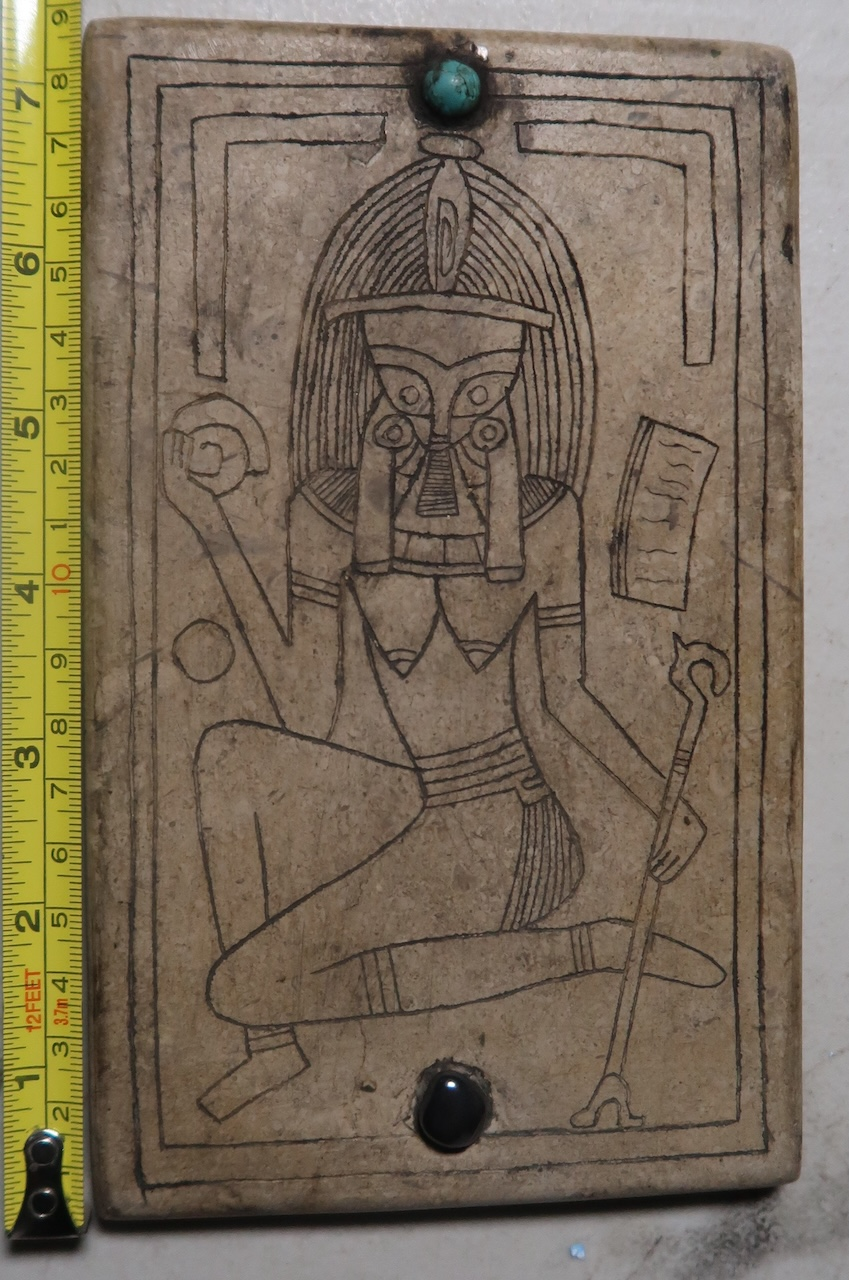
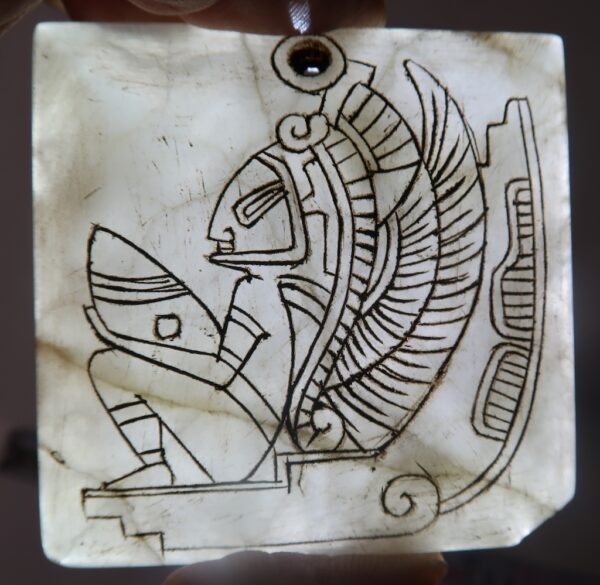
This stone tablet presents itself as a record rather than an image—a surface meant to hold rather than to decorate. On the front, a seated figure occupies the center in composed stillness, its posture neither relaxed nor tense, but deliberate. The face is masked and symmetrical, marked by layered eyes and a rigid mouth, suggesting perception beyond speech. A staff-like implement rests beside the figure, not raised in command, but grounded, as if authority here is exercised through restraint.
Above and below, inset stones punctuate the slab like seals, anchoring the figure between upper and lower realms. The framing lines draw the eye inward, enclosing the arbiter within a bounded space, reinforcing the sense of judgment contained rather than imposed.
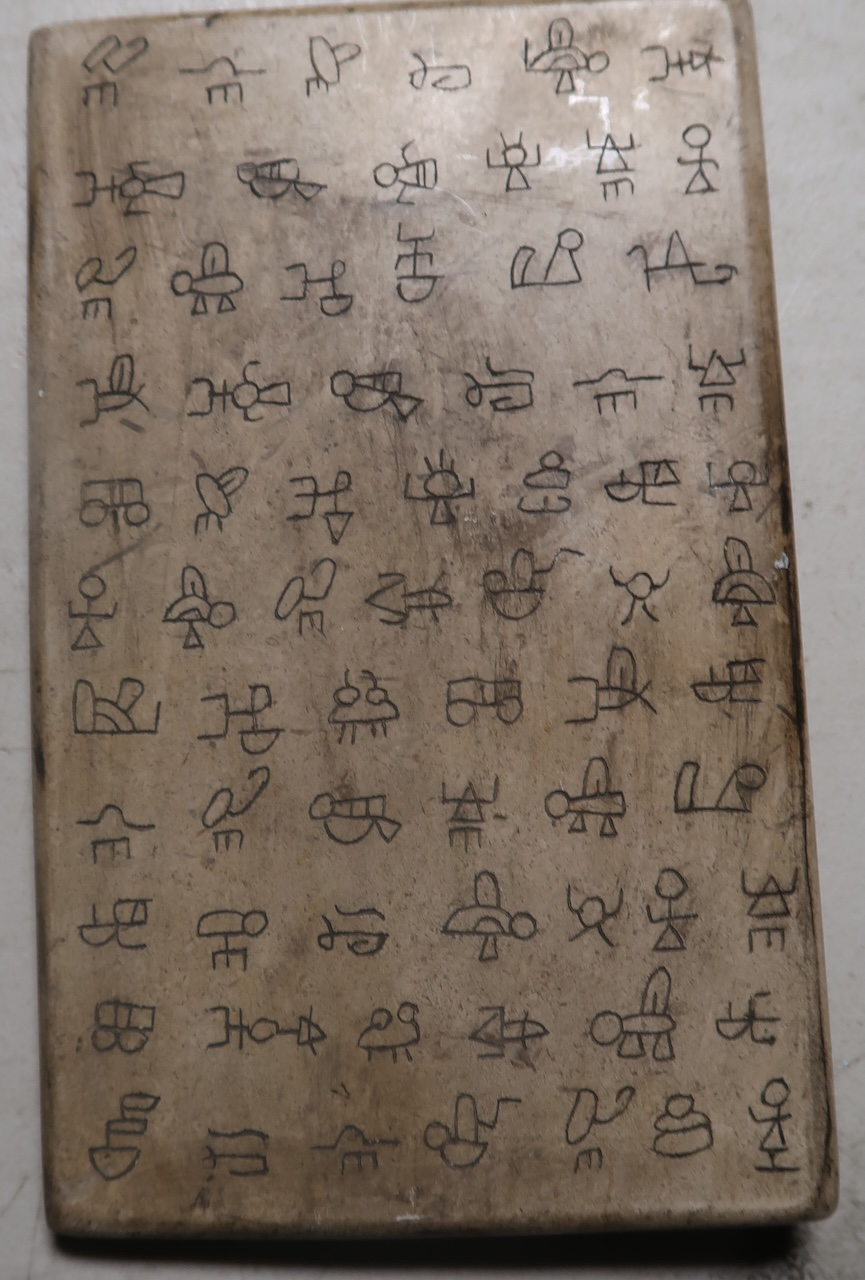
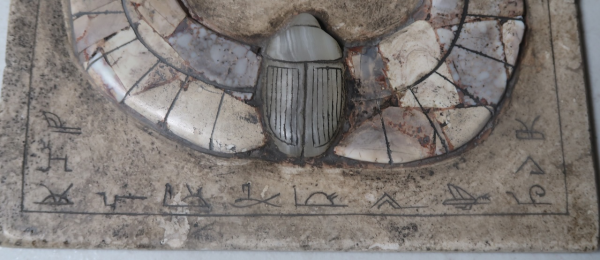
The reverse side abandons figuration altogether, replacing it with dense rows of glyphs—each distinct, each measured. They resemble a script not meant for narration, but for accounting: tallies of acts, movements, offerings, or decisions. The repetition suggests process, memory, and continuity rather than story.
The Ledger of the Silent Arbiter feels like a ceremonial register—an object used to witness, record, and preserve balance. It implies a culture where actions were not merely done, but kept, etched into stone so that nothing of consequence would pass without acknowledgment. To stand before it is to feel that observation does not end with the living; it is archived, patiently, in silence.
W: 606 g
S: 19 x 12 x 1
Reviews
There are no reviews yet.